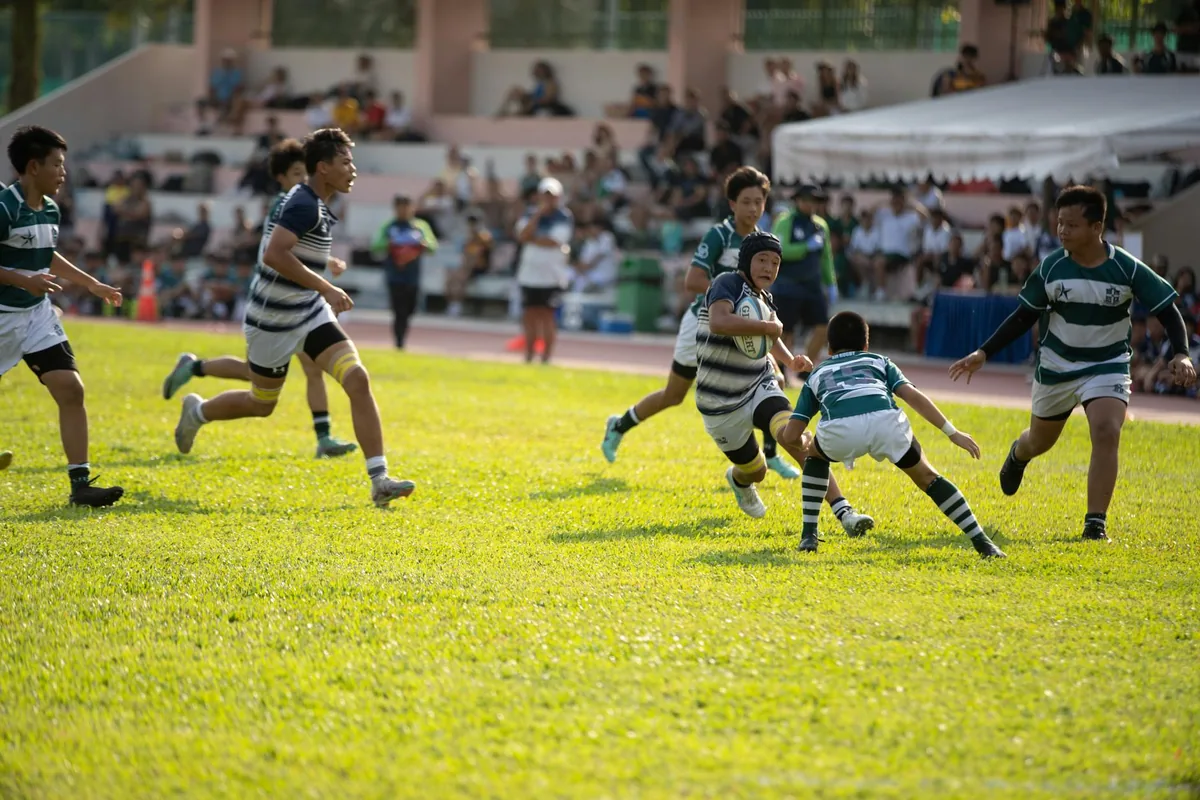
Attacking Kicking Strategies in England's Game Plan
For England Rugby, the boot is not merely a tool for clearing lines or accumulating points. It is a sophisticated weapon of attack, a means to manipulate defenses, create space, and exert relentless pressure. Under the guidance of coaches like Steve Borthwick and attack specialist Richard Wigglesworth, England's kicking strategy has evolved into a multi-faceted and intelligent component of their game plan, designed to turn defensive situations into potent attacking platforms.
The Philosophical Shift: Kicking as an Offensive Act
Gone are the days when kicking was viewed as a purely defensive or territorial concession. The modern philosophy, heavily influenced by southern hemisphere trends and data analytics, posits that a well-executed kick can be the most effective way to breach a structured, set defense. England’s approach is built on the principle of "contestable kicks"—kicks that are not simply given to the opposition, but are challenges for possession. This transforms a kick from a transfer of the ball into a dynamic, unpredictable attacking set-piece in open play. The primary objectives are to isolate defenders, turn big forward packs, and create chaos from which tries can be scored.
Core Objectives of England's Attacking Kicks
- Regain Possession: To win the ball back in advanced areas of the field, often through aerial contests.
- Create Try-Scoring Opportunities: To generate lineouts close to the opponent's line or produce broken-field scenarios.
- Manipulate Defensive Shape: To force defenders to turn, scramble, and make decisions under pressure, creating mismatches.
- Apply Sustained Pressure: To pin opponents in their own half, leading to penalties, turnovers, or fatigue-induced errors.
Key Kicking Tactics and Their Execution
England employs a varied kicking portfolio, each type serving a specific tactical purpose. The choice of kick is dictated by field position, defensive alignment, and the specific skills of the players on the pitch.
The Contestable Box Kick
Primarily the domain of the scrum-half, this is a cornerstone of England's pressure game. The aim is not distance, but a high, hanging kick that gives chasers—often the blindside winger and openside flanker—time to contest the catch. Success depends on pinpoint accuracy, a dominant chase, and excellent communication. When executed well, it can yield turnovers inside the opposition 22, leading directly to scoring chances. This tactic is frequently seen in England’s efforts to establish field position during the intense battles of the Six Nations away games, where territory is at a premium.
The Strategic Grubber and Chip Kick
These low-trajectory kicks are used to exploit space behind a rushing or flat defensive line. The grubber is aimed along the ground to skid into space behind the defense, ideal when a winger or fullback is pressing high. The chip kick, lofted just over the heads of defenders, is designed for a recovering chaser to regather. Players like George Ford and Marcus Smith are masters of this craft, using subtle variations in foot placement to bend the ball around defenders. These kicks are high-risk, high-reward, and often the key to unlocking stubborn defenses in tight tactical battles.
The Cross-Field Bomb
A long, diagonal kick aimed towards the touchline, targeting a winger in a one-on-one aerial contest. This kick tests the defensive winger’s positioning and catching ability under pressure. England’s use of this kick has been refined to create specific mismatches, often using the powerful leap of a player like Tommy Freeman or the height of Henry Slade when positioned out wide. It’s a direct route to generating lineouts deep in enemy territory or, if regathered, an immediate try-scoring opportunity.
The 50:22 and 22:50 Kicks
The introduction of the 50:22 law has been seamlessly integrated into England’s strategic arsenal. By kicking from inside their own half into touch inside the opposition 22, England can secure the throw-in at the resulting lineout—a massive attacking platform. This kick forces backfield defenders to cover more ground, creating potential gaps elsewhere. The inverse, the 22:50, applies similar pressure from the other end of the field. Executing these kicks requires exceptional vision and skill from the fly-half and fullback, a testament to the intensive training camp preparation focused on game-management skills.
The Decision-Makers: Fly-Half as Conductor
The success of any attacking kicking strategy hinges on the decision-making of the playmaker. England’s fly-halves are tasked with reading the defensive picture in real-time: the positioning of the back three, the speed of the defensive line, and the spatial awareness of their own chasers. George Ford’s game management is built around this precise kicking chess match, while Marcus Smith often uses his agility to create the space for a kick himself. This critical decision-making under pressure is a core component of England's game management in high-pressure situations, such as the closing stages of a tight Test match.
Integration with Overall Attack and Defense
An attacking kick is not an isolated event. It is the start of a coordinated team action. The chase is as important as the kick itself. England’s kick-chase structure is a well-drilled defensive pattern in an offensive context, designed to trap the catcher and force errors. Furthermore, these strategies are deeply connected to England’s set-piece strength. A dominant scrum or lineout can win penalties, providing the field position from which these tactical kicks become most lethal. For a deeper understanding of this foundational set-piece, explore our analysis of the evolution of England's lineout strategies.
Evolution and Future Trends
England’s kicking game continues to evolve. Data analytics now provide detailed maps of opposition backfield vulnerabilities, informing pre-match plans. The focus is on variety and unpredictability—mixing long touch-finders with short chips and grubbers to keep defenders guessing. As the global game places an ever-greater premium on possession and territory, England’s ability to refine these attacking kicking strategies will be crucial to their success in tournaments like the Six Nations 2025 and beyond. The modern game demands that every action, including a kick, advances the attacking objective, a principle now firmly embedded in the England Rugby playbook.
For further insight into how kicking tactics are analyzed and developed at the highest level, the World Rugby performance analytics resources provide excellent technical context. Additionally, detailed tactical breakdowns from sources like The Rugby Site often explore the nuances of the modern kicking game.